


What You Need To Know About Autophagy
Autophagy is a body’s mechanism of degrading or recycling damaged cellular components. It is like an intracellular sanitation and serves dual functions of providing raw materials for the production of new components as well as energy generation. Autophagy contributes to the maintenance of homeostasis.
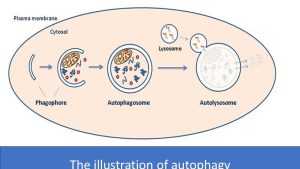
During autophagy, degraded proteins and organelles are sequestered into an autophagosome, a double membrane structure. The autophagosome, in turn, is merged with the lysosome, where the proteolytic enzymes break down the target cellular material.
The importance of Autophagy
-
Autophagy clears out old and damaged tissue components in order to free the cell. By so doing, the cell becomes healthier.
-
The viable materials from the damaged tissue components can be recovered and reused through autophagy.
-
Autophagy can serve as a stress response in terms of needs. When there is no available food moiety for energy production, autophagy can be switched to recruit resources for energy generation.
The Health Benefits of Autophagy
Autophagy is not just for sanitation of the intracellular environment. It goes beyond that and here are the major health benefits:
-
Immune booster: Autophagy helps the cells to regain their vitality and improves their performance. In this way, it can speed up antibody production, strengthening the body’s defense against microbial infections and other diseases.
-
Neuroprotection: Autophagy can protect the neurons by clearing aggregated harmful intracellular proteins, protecting the brains from damages that could result in diseases like Alzheimer’s, Parkinson’s, and Huntington’s disease.
-
Loe risk of chronic diseases: Cells cleared of accumulated cellular components with improved vitality may have lower chances of heart disease, diabetes, and cancer.
Note:
-
Autophagy is most beneficial to healthy individuals
-
As cancer patents, too much autophagy might be detrimental. For instance, cancer patients have increased autophagy in tumor cells. It’s a survival mechanism that helps them endure chemotherapy or low-oxygen environments.
Fasting Promotes Autophagy
Fasting can be a significant activator for autophagy for a few reasons:
-
Decreased nutrient availability: Your body absorbs fewer nutrients when you fast. Your cells are under stress from this limited supply. Autophagy responds by recycling its constituent parts to fulfill your body’s energy requirements.
-
Hormone balance shift: insulin decreases and glucagon increases during fasting. By repurposing the existing cell components, autophagy then instructs the body to move from storing energy to using it.
Energy conservation: While fasting puts your body in “survival mode” to conserve energy, autophagy releases resources and promotes a more efficient cellular operation
NOTE
A number of variables, such as food type, metabolic rate, and general health, might affect how long it takes to cause noticeable autophagy. Below is a summary of many ways of achieving reasonably healthy autophagy:
-
Calorie restriction (CR) studies have shown that autophagy can be triggered by a 10–40% reduction in daily caloric intake. This is compatible with the idea of an “autophagy diet,” which promotes the activity of genes and molecules involved in cellular cleaning by gradually reducing food intake over a period of three to fifteen years.
-
Intermittent fasting (IF): This is a type of eating pattern that accommodates shorter period of eating and fasting, and here are some popular methods of IF
-
Time-Restricted Feeding (TRF): This involves fasting for 16 hours and limiting your daily eating window to a certain period, such as 8 hours. The 16/8 strategy, which entails eating inside an 8-hour window and fasting for 16 hours, is a popular example.
-
Eat-Stop-Eat (ESE): This tactic entails performing a full 24-hour fast once or twice per week. You can drink tea, water and electrolyte water
Intermittent fasting may provide advantages beyond inducing autophagy, such as better insulin sensitivity and weight control.
Factors affecting autophagy
Individual differences may exist in the efficiency with which your body performs autophagy. Here are some important things to think about:
-
Age: As people age, autophagy tends to decrease. Compared to elderly people, younger people could react more strongly. Nonetheless, studies indicate that elderly populations may still benefit from autophagy activation.
-
Genetics:
Although studies are still being conducted, it has been demonstrated that genetic composition matters, with some individuals having a more effective autophagy system than others.
-
Overall health: obesity and diabetes are two chronic diseases that might disrupt autophagy. Insulin resistance, which interferes with the body’s natural autophagy signals, is a common feature of several disorders.
-
Hormones: Autophagy is regulated by glucagon and insulin. Glucagon encourages it, but insulin tends to hinder it. When fasting, the autophagic response may be impacted by hormonal abnormalities.
https://www.insidetracker.com/a/articles/autophagy-fasting-what-you-should-know-before-starting.
https://www.medicalnewstoday.com/articles/autophagy.
https://www.osmosis.org/answers/autophagy.
https://www.nature.com/articles/s41419-023-06154-8

Dr kafor Bernard is an accomplished clinical Scientist and lecturer, with many years of experience. He is a consummate researcher with many research works to his credit. Dr Kafor has a passion for helping people to optimize their life. Currently, he works at Federal Teaching Hospital Owerri, as well as at Madonna University Nigeria